
Zomi Press Policy Explainer | September 25, 2026
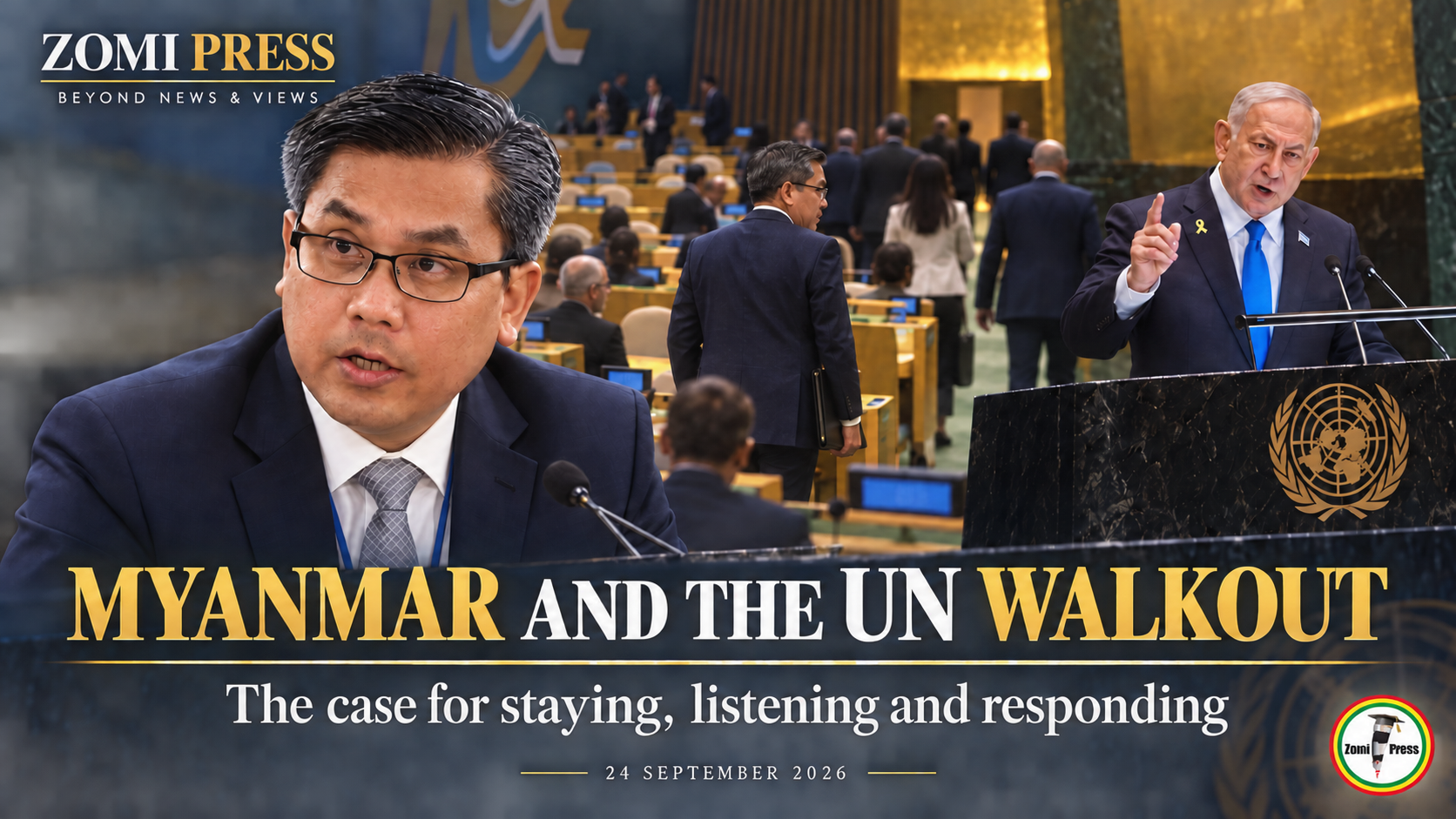
Dozens of delegates walked out as Israeli Prime Minister Benjamin Netanyahu addressed the UN General Assembly on September 24. Others remained, and some applauded. The contrasting responses showed how sharply governments differ over Israel’s conduct—and how many ways diplomats can express those differences.
According to confirmation provided to Zomi Press, Myanmar’s Permanent Representative, Ambassador U Kyaw Moe Tun, personally joined the walkout. Zomi Press believes he would have better served Myanmar by remaining to hear the speech and responding afterward. Listening to Netanyahu would not have meant agreeing with him, excusing harm to Palestinian civilians or abandoning the pursuit of accountability.
What did leaving achieve for Myanmar?
A walkout is a legitimate diplomatic protest. It makes disapproval visible. But visibility alone does not tell Myanmar’s people what their representative hoped to accomplish, why leaving was preferable to a public response, or what action would follow.
Those questions matter while Myanmar faces a continuing humanitarian and political crisis. Its representation at the UN is contested; military-backed authorities renewed their challenge to U Kyaw Moe Tun’s status in September. His public decisions therefore deserve explanations grounded in Myanmar’s interests and the protection of its people.
By staying, the ambassador could have heard Netanyahu’s arguments directly, identified claims he rejected and issued a considered statement. He could have called for civilian protection, humanitarian access and respect for international law in his own words. Remaining in the chamber would not have limited his ability to criticize Israeli policy.
The ICC cases are separate
The International Criminal Court (ICC) has issued arrest warrants for Netanyahu and former Israeli defence minister Yoav Gallant concerning alleged crimes in the situation in Palestine. Warrants are not convictions, and Israel disputes the allegations and the Court’s jurisdiction.
In the separate Bangladesh/Myanmar situation, the ICC prosecutor has applied for an arrest warrant for Min Aung Hlaing concerning alleged crimes against humanity involving Rohingya. An application is different from an issued warrant. Each proceeding must be assessed on its own evidence and legal basis.
Myanmar can consistently support investigation of alleged abuses against Rohingya and other communities while listening to an Israeli prime minister speak. Cooperation among Rohingya advocates, the Chin Human Rights Organization and others seeking accountability for Myanmar’s military does not require a common position on every question involving Israel.
A shared opponent is not enough
The principle for Myanmar’s diplomacy should be: Cooperate where principles and interests meet, but do not build a lasting alliance solely on a shared opponent.
Opposition to Myanmar’s military leadership may unite people and organizations with very different views of the Middle East. That common cause should not automatically decide Myanmar’s response to another country’s leader. Its representative should be able to explain each decision by reference to Myanmar’s people, consistent standards and a practical diplomatic objective.
The walkout does not, on its own, establish that the National Unity Government (NUG) instructed U Kyaw Moe Tun to leave. Nor does one diplomatic act settle whether the NUG serves the will of Myanmar’s people. Those questions require examination of its decisions, public explanations and consultation with affected communities.
What should happen now?
U Kyaw Moe Tun should explain why he joined the walkout and what Myanmar’s mission intends to do next. A substantive statement could set out Myanmar’s position on civilian protection and international law while clarifying how the gesture serves its own diplomatic goals.
For future speeches by leaders whose policies Myanmar opposes, Zomi Press favors a direct approach: stay, listen, assess and respond publicly. A representative can register profound disagreement without surrendering the opportunity to hear and answer the argument.
Zomi Press’s assessment: U Kyaw Moe Tun had the right to walk out. Staying for Netanyahu’s address and responding in Myanmar’s own voice would have been the stronger diplomatic decision for the country’s future.
Sources:
· Video of the September 24 UN address
· ICC decision concerning Netanyahu and Gallant
· ICC prosecutor’s statement concerning Min Aung Hlaing