
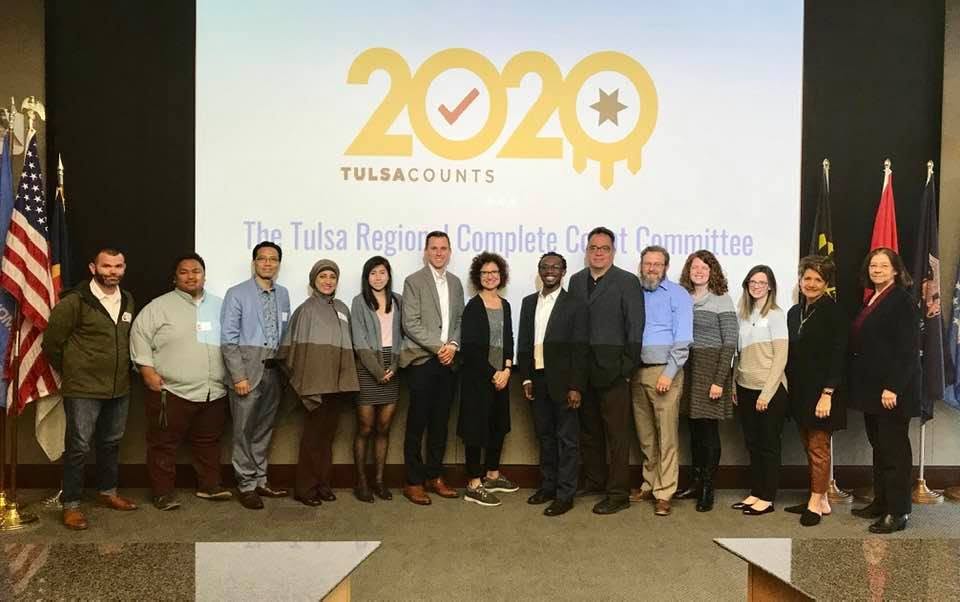
How accurate counting can strengthen recognition, public services, education, health care, immigration, justice, and the long-term visibility of the Zomi people.
By Disciple Sian | Zomi Press Policy Explainer
The census is often described as a national headcount. For the Zomi people, however, it is much more than a number.
A census helps determine whether a people are officially visible, whether their language is recognized, whether their communities can demonstrate public needs, and whether institutions have reliable evidence for planning services. When Zomi identity and language are recorded accurately, demographic visibility can support education, health care, language access, public safety, research, cultural preservation, and community development.
When Zomi identity is omitted, misclassified, or fragmented among unrelated or incomplete categories, the consequences may continue for decades.
The central principle is simple:
If the Zomi are not counted accurately, governments and institutions cannot fully see, understand, or serve the Zomi community.
This issue now extends across several countries. Myanmar’s 2014 census exposed the political consequences of ethnic classification. The United States’ 2010 and 2020 censuses demonstrated the importance of organized community participation. Australia’s 2026 Census created another opportunity for Zomi families to record their ancestry and home language accurately.
The census is therefore not merely about how many Zomi people exist. It is about whether the Zomi name, language, needs, contributions, and collective future remain visible in public records
Census Data Is About More Than Population
Modern census systems collect or support information concerning population, housing, age, education, employment, language, ancestry, household composition, disability, migration, and other social conditions.
Governments use this information to understand where people live and what communities may need. Public institutions, researchers, schools, hospitals, businesses, nonprofit organizations, and community organizations use census-derived statistics for planning and decision-making.
In the United States, the decennial census does not directly ask the same language questions as the American Community Survey. Language information is gathered primarily through the annual American Community Survey, which asks whether a person speaks a language other than English at home, what language is spoken, and how well the person speaks English.1
This distinction is important:
- Writing Zomi in an appropriate race, ethnicity, or ancestry write-in field strengthens the visibility of Zomi identity.
- Reporting Zomi as the language spoken at home strengthens language-use and language-access data.
- Completing the entire census or survey ensures that the household contributes to population, housing, education, employment, income, and socioeconomic statistics.
One federal analysis found that census-derived data helped guide approximately $2.8 trillion through 353 federal assistance programs during fiscal year 2021.2 This does not mean that writing “Zomi” automatically creates direct financial benefits for an individual or a Zomi organization. It means that census-derived statistics help governments decide how major public resources are distributed geographically and programmatically.
The practical benefit is cumulative. Census responses, American Community Survey data, school language records, hospital language preferences, immigration-language requests, interpreter-service records, and community surveys can collectively demonstrate that Zomi is a distinct and continuing public need.
Australia’s 2026 Census and the Importance of Writing Zomi
Australia conducted its latest national census on August 11, 2026. Everyone in Australia on census night was required to be included, with limited exceptions such as certain foreign diplomats and their families.3
Australia’s census provides an important opportunity to record both ancestry and language.
The ancestry question seeks information about the cultural or ethnic groups with which a person identifies. The language question asks whether the person uses a language other than English at home and, if so, which language is used most often.
For a Zomi respondent whose identity and household-language circumstances fit the questions, accurate responses may include:
These are separate questions. A person may identify as Zomi by ancestry while speaking more than one language. The household must answer each question truthfully according to the form’s instructions and the individual’s actual circumstances.
The Australian Bureau of Statistics explains that the language-used-at-home variable identifies the main non-English language used in the household. If a language is not listed among the checkboxes, respondents can select the appropriate “other” option and write the language in the space provided.4
Official 2021 Australian census tables recorded 1,886 people nationally who reported Zomi as a language used at home. The figures included 896 in Victoria and 465 in Queensland.5 These numbers should not be treated as the complete Zomi population of Australia. They count people who reported Zomi as their principal language used at home under that specific census question.
The total Zomi population may be larger because:
- Some Zomi people may use English most often at home.
- Some may have written Burmese or another language.
- Some may have selected a broader or different ancestry category.
- Some may have misunderstood the question.
- Some households may not have completed the census.
- Children raised in multilingual households may use a different primary language at home while continuing to identify as Zomi.
This is precisely why consistent and accurate reporting matters. When people use multiple labels for the same identity or language, official totals become fragmented.
The 2026 Zomi Census campaign in Australia represents a continuation of a wider community effort: helping Zomi families understand that they can belong fully to Australia while truthfully identifying their Zomi ancestry and language.
Writing “Zomi” does not diminish Australian citizenship. It improves the accuracy of Australia’s national record.
The United States: Identity and Language Are Counted Differently
The United States does not currently provide one simple national table showing the complete number of Zomi people by ethnicity and language.
The decennial census and the American Community Survey serve related but distinct purposes. Race and identity information may be recorded through available response categories and write-in fields. Language information is gathered through the American Community Survey and certain administrative systems maintained by schools, health-care providers, immigration agencies, courts, and other institutions.
For Zomi Americans, this means that accurate demographic visibility requires consistent participation across several systems.
A household may need to:
- Write Zomi in an appropriate identity field.
- Report Zomi as the language spoken at home when that is accurate.
- Identify Zomi as the preferred language in school records.
- Request Zomi language assistance in medical settings.
- Record Zomi on immigration-related interpreter documentation.
- Request a qualified Zomi interpreter in courts, legal offices, and public agencies.
Each record contributes to a larger picture of community need.
Accurate reporting can help institutions understand where Zomi-speaking households are located, how many residents may have limited English proficiency, and where interpreters, translated materials, bilingual personnel, and culturally informed outreach may be needed
Recognition Achieved Through Community-Led Advocacy
The growing use of “Zomi” and “Zomi language” in the United States did not happen automatically. It reflects years of community-led census mobilization, institutional engagement, volunteer interpretation, and language-recognition advocacy.
Zomi Innkuan USA, Inc.—also known as Zomi Community USA, Inc.—local Zomi organizations, churches, pastors, volunteers, interpreters, educators, media professionals, and individual advocates encouraged Zomi families to participate in the 2010 and 2020 U.S. censuses and to identify themselves consistently as Zomi.
Zomi Innkuan USA serves as a national umbrella organization committed to the unity, development, welfare, and cultural preservation of Zomi communities across the United States.6
This collective effort helped make the Zomi name more visible to public institutions. It contributed to a wider understanding that Zomi is not merely an informal community label but the self-identified name of a distinct people and language community.
The relationship between census participation and institutional recognition must nevertheless be described carefully. No single census response automatically caused a government agency to adopt “Zomi.” Census participation became part of a larger body of evidence that included:
- Immigration and refugee records
- Requests for Zomi interpreters
- School-enrollment and home-language data
- Medical language-preference records
- Community population studies
- Direct engagement with public agencies
- Advocacy by churches and community organizations
- Interpreter-vendor demand
- Public-health outreach
- Media reporting and cultural events
Together, these records made the Zomi population increasingly difficult to overlook.
The Zomi name is now visible in several official and institutional contexts, but recognition on a form, language list, database, or vendor catalog is only the beginning. The true test is whether a Zomi-speaking person can obtain competent assistance at a hospital, school, immigration interview, court, police station, insurance office, or 911 center.
An Estimated 40,000 Zomi Speakers Need Better Documentation
As of September 2026, Zomi community advocates estimate that approximately 40,000 Zomi-speaking people live lawfully in the United States, including naturalized citizens, lawful permanent residents, humanitarian entrants, and people in other authorized immigration categories.
This figure must be presented transparently as a community estimate, not as a verified standalone population total published by the U.S. Census Bureau.
There is no single accessible federal table that counts every person of Zomi ethnicity or every Zomi-language user. Some people may be recorded under broader racial, national-origin, or language categories. Others may identify differently across census, immigration, health, school, and community records.
The scale and national character of the community were publicly demonstrated during the Zomi National Conference USA 2026, held at the Mabee Center in Tulsa from September 4–6. Hosted by Zomi Innkuan USA, the gathering brought together more than 6,000 participants from across the United States, along with guests from Australia, India, Norway, and other countries.7
Conference attendance is not a substitute for a national population count. It nevertheless provides evidence of a substantial, organized, and geographically dispersed Zomi American population.
A credible national demographic study is needed to examine:
- The total number of Zomi people in the United States
- Citizenship and immigration categories
- State and metropolitan distribution
- Zomi-language use in the home
- English proficiency
- Age distribution
- Educational attainment
- Health and disability needs
- Interpretation and translation needs
- The availability of qualified Zomi interpreters
- Economic and professional contributions
- Participation in schools, churches, businesses, and civic institutions
Until such a study is completed, the approximate figure of 40,000 should be identified as a community-based estimate rather than an official census total.
Why Zomi Language Access Matters
Language access is one of the most important practical benefits of accurate Zomi counting.
When Zomi is not recorded correctly, an institution may assign a Burmese interpreter to a Zomi-speaking person. Although many Zomi people have varying levels of Burmese-language proficiency, Burmese and Zomi are not the same language.
“Burmese” may describe citizenship, nationality, national origin, or the dominant language of Myanmar. It is not an adequate substitute for Zomi language identification.
For older adults, recent arrivals, English learners, trauma survivors, and people with limited English proficiency, the consequences of using the wrong language can be serious.
Language barriers can affect:
- Medical diagnosis and treatment
- Medication safety
- Educational participation
- Immigration eligibility and credibility
- Police investigations
- Court proceedings
- Insurance claims
- Employment rights
- Banking and financial decisions
- Emergency response
No person should lose access to health care, education, immigration protection, public safety, or financial justice because an institution failed to recognize the language that person understands best.
Health Care and Public Health
A Zomi patient may communicate adequately in conversational English but still struggle to describe complex symptoms or understand specialized medical terminology.
Language assistance may be essential when discussing:
- Emergency symptoms
- Medication dosage and side effects
- Surgery and informed consent
- Pregnancy and childbirth
- Pediatric care
- Mental-health conditions
- Chronic illnesses
- Disability services
- End-of-life decisions
- Medical bills and insurance coverage
Federal nondiscrimination requirements may require covered health programs and activities to take reasonable steps to provide meaningful access for eligible people with limited English proficiency. Depending on the institution and circumstances, this may include qualified oral interpretation and translated vital information.8
Because litigation and federal policy changes have affected parts of the Section 1557 regulatory framework, institutions should review the current legal requirements applicable to their programs rather than relying on outdated summaries. The fundamental policy concern remains: a patient cannot provide meaningful informed consent if the patient does not understand the information being communicated.
Hospitals, clinics, public-health departments, and insurance programs should:
- Record “Zomi” as the patient’s preferred language.
- Display language preference prominently in the medical record.
- Provide qualified interpretation in person, by telephone, or by secure video.
- Translate high-priority health and safety information.
- Train staff not to substitute Burmese automatically.
- Avoid routinely using children as interpreters.
- Develop Zomi-language public-health campaigns.
- Partner with Zomi churches and community organizations.
- Include Zomi speakers in emergency and pandemic planning.
Better communication can improve preventive care, early diagnosis, medication safety, maternal health, mental-health access, chronic-disease management, and emergency treatment.
Education Must Include Both Students and Parents
English proficiency is essential for educational and economic opportunity. However, learning English is a process, not an immediate condition.
Zomi students learning English need appropriate instruction and support so that a temporary language barrier does not become a permanent academic disadvantage.
Parents and guardians with limited English proficiency must also be able to understand important information concerning:
- Enrollment and attendance
- Grades and academic progress
- Special-education evaluations
- Individualized Education Programs
- Discipline and suspension
- Bullying and school safety
- Health requirements
- Graduation
- College preparation
- Financial aid
- Transportation
- Emergency closures
Federal guidance explains that school districts must take appropriate steps to ensure that English-learner students can participate meaningfully in educational programs. Schools must also communicate essential information to parents with limited English proficiency in a language they can understand.9
Children should not be expected to interpret special-education meetings, disciplinary hearings, medical emergencies, or other sensitive proceedings for their parents.
Accurate language data can help districts plan for:
- Trained Zomi interpreters
- Translated notices
- Bilingual family liaisons
- English-language instruction
- Culturally informed student services
- Parent-engagement programs
- Mental-health and counseling services
- Academic intervention
Recognizing Zomi does not weaken English education. Zomi can serve as a communication bridge while students and parents develop stronger English proficiency.
Zomi as a World-Language and Heritage-Language Option
Education policy should move beyond treating Zomi only as a barrier to English acquisition. Zomi–English bilingualism is also an academic, cultural, civic, and professional asset.
Schools serving substantial Zomi populations should explore offering Zomi as:
- A world-language course
- A heritage-language course
- An elective carrying academic credit
- A proficiency-based credit option
- An after-school or summer program
- A community-based language partnership
- An online or shared-district course
- A bilingual pathway where enrollment and resources justify it
A heritage-language program would be particularly valuable for students who identify as Zomi but need stronger reading, writing, grammar, and academic vocabulary.
The goal should extend beyond one high-school elective. A sustainable pathway should help students develop listening, speaking, reading, and writing proficiency over several years.
Schools without enough students to maintain a full-time Zomi class could:
- Cooperate across districts
- Use qualified online instructors
- Establish shared teaching positions
- Recognize approved community-based coursework
- Award academic credit based on demonstrated proficiency
- Partner with Zomi educators, churches, and language organizations
The Zomi language should not be preserved only inside the home or church. It should be given appropriate opportunities to develop as a language of education, media, technology, public service, and professional communication.
Expand the Seal of Biliteracy
The Seal of Biliteracy is an official recognition awarded to students who demonstrate proficiency in English and at least one additional language.
Tulsa Public Schools has included Zomi among the languages represented in its Seal of Biliteracy program. A district report stated that students had earned the Seal in languages including Zomi.10
This is a significant achievement, but the opportunity must be publicized and implemented consistently.
Zomi students and families need clear information about:
- Eligibility
- Application procedures
- Testing
- Deadlines
- Required proficiency
- Preparation resources
- Transcript and diploma recognition
Schools should not wait until a student’s final year of high school to introduce the Seal. A stronger pathway would include:
- Early identification of Zomi-speaking students
- Elementary and middle-school biliteracy pathways
- Zomi literacy instruction
- High-school credit based on proficiency
- Accessible Zomi assessments
- Recognition on transcripts and diplomas
- Partnerships with Zomi educators and organizations
The Seal of Biliteracy can become the beginning of a professional pathway into interpretation, education, medicine, law, public administration, journalism, international relations, technology, ministry, and community service.
Immigration Requires Accuracy and Professional Interpretation
Language access is especially important in immigration matters because a misunderstood question or inaccurate interpretation can affect a person’s legal future.
Zomi applicants may need competent language assistance when dealing with:
- Green Card applications and interviews
- Citizenship and naturalization
- Asylum interviews
- Refugee and humanitarian applications
- Family petitions
- Employment authorization
- Requests for evidence
- Immigration-court proceedings
- Communications with attorneys and accredited representatives
An asylum applicant may be required to recount persecution, detention, political activity, religious discrimination, threats, torture, trauma, or violence in precise chronological detail.
Poor interpretation may create apparent contradictions concerning dates, locations, relationships, injuries, organizations, or political events. These inconsistencies can later be treated as credibility concerns.
USCIS requires an interpreter participating in covered interviews to interpret accurately, literally, and fully. Form G-1256 documents the interpreter’s role and declaration for an interpreted USCIS interview.11
Current Form I-589 instructions and USCIS procedures should always be reviewed before an asylum interview because procedural requirements can change.12
Immigration interpretation requires:
- Advanced proficiency in Zomi and English
- Knowledge of immigration and asylum terminology
- Accurate interpretation of dates, places, names, and events
- Neutrality
- Confidentiality
- Trauma-informed communication
- Professional ethics
- Complete interpretation without summarizing or adding opinions
Some naturalization applicants may qualify for statutory exceptions to the English requirement because of their age and length of lawful permanent residence. Others may qualify for disability-related accommodations. Applicants who do not qualify remain subject to the applicable English and civics requirements.
Census participation does not automatically guarantee a government-provided Zomi interpreter at every immigration appointment. Documented demand can, however, encourage agencies, interpreter contractors, attorneys, and community organizations to recruit qualified Zomi interpreters and develop reliable materials.
Courts, Law Enforcement, 911, and Public Safety
Access to justice depends on the ability to understand and be understood.
Zomi-speaking individuals may require language assistance as:
- Victims
- Witnesses
- Suspects
- Defendants
- Parents or guardians
- Applicants for protective orders
- Participants in civil proceedings
- Participants in criminal proceedings
In 2023, the U.S. Department of Justice reached an agreement with the Oklahoma court system addressing language access under Title VI. The agreement required oral and written language assistance in court proceedings and operations at no cost to people with limited English proficiency, along with a statewide language-access plan, improved tracking, translated notices, and a complaint process.13
Courts should:
- Add Zomi to interpreter-request systems.
- Track Zomi-language cases accurately.
- Recruit and train Zomi court interpreters.
- Inform court users about language assistance.
- Translate essential rights and procedural notices.
- Train judges, clerks, prosecutors, and court personnel.
- Maintain a language-access complaint process.
- Avoid charging eligible court users for required interpretation.
Police departments must also have procedures for communicating with victims, witnesses, suspects, and members of the public who have limited English proficiency.
This is especially important in cases involving:
- Domestic violence
- Child safety
- Sexual assault
- Human trafficking
- Hate crimes
- Missing persons
- Mental-health emergencies
- Serious accidents
Language access is equally critical during 911 calls. A caller may need to communicate an address, injury, fire, weapon, domestic-violence incident, unconscious person, or immediate threat within seconds.
Emergency centers and public-safety agencies should:
- Include Zomi in telephonic interpreter systems.
- Train dispatchers to identify Zomi correctly.
- Use language-identification cards or recorded prompts.
- Establish rapid interpreter-connection procedures.
- Track unsuccessful language requests.
- Translate emergency-preparedness information.
- Conduct Zomi-language education about calling 911.
- Include Zomi churches and media in disaster communication.
A relative or bystander may sometimes be needed temporarily to stabilize an immediate emergency. That person should not replace a qualified interpreter during investigations, formal interviews, protective-order explanations, or proceedings with legal consequences.
Insurance, Banking, Employment, and Private Services
Language barriers do not end at the doors of government.
Zomi-speaking consumers may face difficulties when handling:
- Health-insurance claims and appeals
- Automobile-accident claims
- Homeowners’ and renters’ insurance
- Workplace injuries
- Workers’ compensation
- Disability applications
- Life-insurance claims
- Banking and mortgage documents
- Credit and fraud complaints
- Utility services
Insurance terminology is difficult even for many fluent English speakers. Terms such as deductible, exclusion, liability, subrogation, proof of loss, and adverse determination may be nearly impossible to understand without assistance.
A misunderstood notice can result in a missed deadline, denied claim, inadequate settlement, or uninformed waiver of rights.
Legal requirements vary according to the institution, service, jurisdiction, and receipt of federal financial assistance. The policy goal should nevertheless extend beyond minimum compliance.
Insurers, banks, employers, utilities, hospitals, and major service providers in areas with substantial Zomi populations should include Zomi in:
- Language-needs assessments
- Interpreter contracts
- Customer-access plans
- Staff training
- Complaint procedures
- Community outreach
Better communication reduces misunderstandings, strengthens compliance, prevents disputes, improves customer service, and builds institutional trust.
Hire Qualified Zomi–English Bilingual Employees
Many institutions cannot maintain full-time interpreters for every language. One practical response is to recruit qualified employees who demonstrate professional proficiency in both Zomi and English for positions where those skills are genuinely job-related.
Institutions should consider bilingual capacity when hiring for:
- Reception and customer service
- Human resources
- Patient registration
- Community health
- School enrollment
- Family engagement
- Social services
- Insurance claims
- Legal intake
- Victim services
- 911 and public-safety support
- Community outreach
- Public information
Hiring must be based on language proficiency and legitimate job duties—not ethnicity or national origin.
Employers can:
- Record employees’ verified language abilities.
- Recruit for designated bilingual positions.
- Establish bilingual-pay differentials.
- Provide ethics and confidentiality training.
- Define the limits of bilingual duties.
- Avoid indiscriminately using untrained bilingual employees.
- Create referral procedures for professional interpretation.
A Zomi-speaking nurse, teacher, receptionist, police officer, or community liaison should not automatically be required to interpret a surgery consent, asylum interview, police interrogation, court proceeding, mental-health evaluation, or complex insurance dispute.
A responsible institutional model uses three levels:
- Qualified bilingual employees for ordinary communication
- Trained bilingual staff for approved language-assistance duties within defined limits
- Qualified professional interpreters and translators for high-risk medical, legal, immigration, court, and emergency matters
Language Agencies Must Help Build Professional Capacity
Language-service companies play a central role in closing the Zomi language gap.
Listing “Zomi” in a catalog is insufficient if no qualified interpreter is available when a request arrives.
Language agencies should:
- Recruit Zomi–English interpreters nationally.
- Partner with churches, colleges, community organizations, and Zomi media.
- Provide affordable medical, legal, educational, and immigration training.
- Test proficiency in Zomi and English.
- Establish quality-review and complaint procedures.
- Track unanswered or incorrectly routed requests.
- Compensate interpreters fairly.
- Avoid relabeling Zomi requests as Burmese.
- Develop telephone and secure-video capacity.
Professional Zomi language access cannot be built permanently on unpaid or underpaid community labor.
Institutions purchasing language services should require vendors to report:
- The number of qualified Zomi interpreters
- Average connection time
- Missed or unfilled requests
- Interpreter qualifications
- Complaint rates
- Quality-assurance procedures
Contracts should include corrective measures when vendors repeatedly fail to supply the requested language or provide unqualified personnel.
English as a Bridge, Not a Replacement for Zomi
Zomi language access and English learning should not be presented as competing goals.
English is an indispensable bridge to education, employment, citizenship, civic participation, and opportunity in the United States, Australia, and other English-speaking countries. Zomi families should be encouraged and supported to learn English.
But a bridge is valuable because it connects two sides. It does not require one side to disappear.
Language access protects people while they are learning English and in complex situations where conversational English is insufficient. This is particularly important for older adults, recent arrivals, trauma survivors, people with disabilities, and those facing medical, legal, or financial decisions.
A responsible policy pursues both goals:
Promote English proficiency for integration and opportunity while providing meaningful Zomi-language access for safety, accuracy, dignity, and equal participation.
Myanmar and the Political Power of Classification
Myanmar presents the most politically consequential Zomi census case.
The 2014 Population and Housing Census was the country’s first national census in more than three decades. Its final Union Report recorded a population of approximately 51.5 million, including estimates for areas where complete enumeration was not possible.14
Yet the census operated within Myanmar’s disputed framework of 135 officially recognized ethnic classifications. Zomi identity was not adequately represented as a coherent collective category. Related Zomi communities were divided among administratively assigned subgroup names and codes.
For the Zomi, this was both a system failure and a strategy fallacy.
It was a system failure because the classification structure did not faithfully represent the collective identity chosen by the people themselves.
It became a strategy fallacy when members of the same people used multiple fragmented labels without also establishing their shared Zomi identity.
The result was statistical fragmentation: one people could appear in official records as several small and seemingly unrelated populations.
In a country where ethnicity affects debates over federalism, territorial administration, language, education, representation, development, and collective rights, census classification is never politically neutral.
Population data may influence:
- Political representation
- Administrative boundaries
- Constitutional negotiations
- Language policy
- Education
- Development budgets
- Humanitarian assistance
- Cultural rights
- Claims concerning homeland and population
A future credible Myanmar census should:
- Protect voluntary self-identification.
- Permit more than one level of identity.
- Establish transparent coding procedures.
- Allow people to identify collectively as Zomi.
- Preserve local, linguistic, clan, or regional affiliations where desired.
- Consult affected communities before finalizing categories.
- Publish coding rules and review mechanisms.
- Permit correction of inaccurate classification.
Zomi unity and internal diversity do not have to cancel one another.
A person can maintain a local, clan, township, or linguistic identity while also identifying with the wider Zomi people. A well-designed census should allow layered identity rather than forcing a person to choose between community heritage and collective nationhood.
The Importance of Zomi Counting in Other Countries
The Zomi are now a transnational people with established communities across Asia, North America, Europe, Australia, and the Pacific.
Census structures differ among New Zealand, Norway, Canada, Malaysia, India, the United Kingdom, and other countries. Some ask about ethnicity or ancestry. Others focus on nationality, birthplace, citizenship, or language.
The guiding principle remains:
When an official form permits a truthful self-described identity or language response, Zomi people should use “Zomi” consistently.
Every campaign must provide country-specific instructions. A method suitable for the United States may not apply directly to Australia, Myanmar, India, Norway, or New Zealand.
Community organizations must study the actual wording of each census and avoid giving instructions that could produce inaccurate responses.
Three Possible Futures
1. Zomi Is Counted Consistently
Zomi households report “Zomi” wherever an appropriate identity, ancestry, ethnicity, or language field is available.
Governments and institutions obtain usable data. Community organizations can demonstrate need, request interpreters, pursue grants, develop language programs, and build professional capacity.
Result: Demographic visibility becomes institutional capacity.
2. Zomi Identity Is Fragmented
Members of the same community report numerous local, imposed, or overlapping identities without also recording “Zomi.”
Each resulting category appears too small to receive serious institutional attention.
Result: The Zomi exist socially but disappear statistically.
3. Zomi Households Do Not Participate
Families avoid the census because of fear, mistrust, confusion, language barriers, or the belief that one response does not matter.
Result: Undercounting weakens representation, research, funding applications, emergency planning, education, and language access for the entire community.
A Coordinated Zomi Census and Language-Access Action Plan
Establish a National Task Force
Zomi Innkuan USA, local communities, churches, educators, health professionals, attorneys, interpreters, researchers, and media institutions should coordinate demographic research, terminology development, professional training, institutional outreach, and policy advocacy.
Verify the National Population Estimate
A voluntary and confidential national study should examine the estimated 40,000-person Zomi population in the United States, including location, age, citizenship, immigration status, language use, English proficiency, education, employment, and service needs.
Create an Interpreter and Translator Registry
A verified directory should identify trained Zomi–English professionals by state and specialization, including:
- Medical interpretation
- Legal interpretation
- Court interpretation
- Immigration and asylum interpretation
- Educational interpretation
- Insurance and financial interpretation
- Emergency communication
- Written translation
Develop Professional Training
Community organizations should partner with hospitals, universities, courts, interpreter associations, and language companies to provide training in:
- Ethics
- Confidentiality
- Interpretation techniques
- Note-taking
- Sight translation
- Medical and legal terminology
- Trauma-informed communication
- Professional boundaries
Standardized Critical Terminology
Zomi linguists, interpreters, educators, pastors, attorneys, physicians, nurses, journalists, and other specialists should develop reviewed glossaries for:
- Medicine and mental health
- Citizenship and immigration
- Asylum and humanitarian protection
- Education and special education
- Courts and law enforcement
- Insurance and banking
- Emergency management
- Technology and artificial intelligence
Require Institutional Language-Access Plans
Government agencies, hospitals, schools, courts, police departments, insurers, and social-service institutions should maintain written procedures for:
- Identifying a person’s language
- Obtaining qualified interpreters
- Translating vital documents
- Handling emergencies
- Training staff
- Resolving complaints
- Monitoring contractor performance
Expand Bilingual Employment Pathways
Employers should create positions with formally designated Zomi–English responsibilities, verify proficiency, provide training, define duties, and compensate employees appropriately.
Expand Educational Pathways
Schools should offer Zomi heritage-language instruction, world-language options, proficiency-based credit, early biliteracy pathways, and equitable access to the Seal of Biliteracy.
Monitor Language-Access Failures
A confidential reporting system should document:
- Denial of interpretation
- Assignment of the wrong language
- Use of children as interpreters
- Unqualified interpretation
- Untranslated vital documents
- Delayed emergency communication
- Discriminatory treatment connected to language or national origin
Verified patterns can support training, institutional reform, contract enforcement, and appropriate civil-rights review.
Use Technology With Human Accountability
Telephone interpretation, secure video, digital glossaries, speech technology, and machine translation can expand access.
Artificial intelligence may assist with preliminary translation, terminology management, and administrative communication. High-stakes medical, legal, immigration, and emergency communication should receive qualified human interpretation or review.
Measure Progress Publicly
Institutions should report:
- Number of Zomi-language requests
- Percentage of requests fulfilled
- Average interpreter-connection time
- Number of qualified interpreters
- Number of translated vital documents
- Complaints and corrective actions
- Seal of Biliteracy participation
- Zomi-language courses and enrollment
- Community satisfaction
- Remaining barriers
From Recognition to Real Access
The Zomi community has already carried much of the burden of recognition through census participation, volunteer interpretation, public education, church-based assistance, and sustained institutional advocacy.
The next stage requires federal, state, and local governments, language-service companies, hospitals, schools, courts, police departments, 911 centers, insurers, employers, and other private institutions to share responsibility.
Better Zomi–English communication can produce tangible benefits:
- Safer medical treatment
- Stronger parent participation in education
- More accurate immigration proceedings
- Fairer court and law-enforcement encounters
- Faster emergency response
- Better insurance and consumer outcomes
- Greater trust in public institutions
- More professional opportunities for bilingual Zomi Americans
The inclusion of “Zomi” in official records represents meaningful progress. It honors the work of Zomi Innkuan USA, local organizations, churches, volunteers, census advocates, interpreters, educators, and individuals who insisted that the Zomi people be counted under their own name.
But recognition must not be mistaken for completion.
A language may appear in a government database while remaining unavailable at a hospital bedside. It may appear in a vendor catalog while no qualified interpreter is available for an asylum interview. It may appear on a school’s Seal of Biliteracy list while students receive little preparation. It may be statistically recognized while remaining unavailable through 911, courts, clinics, legal offices, and insurance systems.
The next stage of Zomi census advocacy must therefore move from recognition to implementation.
Count Zomi accurately. Name the language correctly. Build English as a bridge. Ensure that no Zomi person is left unheard.
Writing “Zomi” is not a rejection of citizenship or belonging in another country. It is the truthful affirmation of who the Zomi are within that country.
The census is not only about how many Zomi people exist today. It is about whether the Zomi name—and the people who carry it—will remain visible tomorrow.
Be counted. Be seen. Write Zomi.
Bibliography
Australian Bureau of Statistics. “2021 Census All Persons QuickStats: Australia.” Accessed September 16, 2026. https://www.abs.gov.au/census/find-census-data/quickstats/2021/AUS.
———. “2026 Census of Population and Housing.” Accessed September 16, 2026. https://www.abs.gov.au/census.
———. “Australian Standard Classification of Languages (ASCL), 2016.” July 18, 2016. https://www.abs.gov.au/statistics/classifications/australian-standard-classification-languages-ascl/2016.
———. “Information for Migrants, Refugees and International Visitors.” 2026 Census. Accessed September 16, 2026. https://info.census.abs.gov.au/.
———. “Language Used at Home (LANP).” 2021 Census Dictionary. Accessed September 16, 2026. https://www.abs.gov.au/census/guide-census-data/census-dictionary/2021/variables-topic/cultural-diversity/language-used-home-lanp.
Oklahoma State Department of Education. “Seal of Biliteracy.” Accessed September 16, 2026. https://oklahoma.gov/education/.
Reamer, Andrew. “The Currency of Our Data: A Critical Input into Federal Funding.” U.S. Census Bureau. June 14, 2023. https://www.census.gov/newsroom/blogs/random-samplings/2023/06/currency-of-our-data.html.
Republic of the Union of Myanmar, Department of Population. The 2014 Myanmar Population and Housing Census: The Union Report. Census Report, vol. 2. Nay Pyi Taw: Ministry of Immigration and Population, 2015. https://myanmar.unfpa.org/en/publications/union-report-volume-2-main-census-report.
SBS. “Zomi—Australian Census Explorer.” Based on Australian Bureau of Statistics 2021 Census data. Accessed September 16, 2026. https://www.sbs.com.au/census-explorer-2021/index.html?lang=en&languages=zomi&topic=cultural-diversity.
Tulsa Public Schools. “Dual Language Learning Options Available for Students at Tulsa Public Schools.” December 20, 2021. https://www.tulsaschools.org/.
United Nations Department of Economic and Social Affairs. “Zomi Innkuan USA Inc.” Civil Society Database. Accessed September 16, 2026. https://esango.un.org/civilsociety/.
U.S. Census Bureau. “American Community Survey.” Accessed September 16, 2026. https://www.census.gov/programs-surveys/acs.html.
———. “Detailed Languages Spoken at Home and Ability to Speak English for the Population 5 Years and Over: 2017–2021.” June 3, 2025. https://www.census.gov/data/tables/2021/demo/acs-5year-language.html.
———. “Language Spoken at Home.” American Community Survey. Accessed September 16, 2026. https://www.census.gov/acs/www/about/why-we-ask-each-question/language/.
U.S. Citizenship and Immigration Services. “G-1256, Declaration for Interpreted USCIS Interview.” Accessed September 16, 2026. https://www.uscis.gov/g-1256.
———. “I-589, Application for Asylum and for Withholding of Removal.” Revised July 28, 2026. https://www.uscis.gov/i-589.
———. “Interpreters and Preparers.” In USCIS Policy Manual. Vol. 1, pt. B, chap. 5. Accessed September 16, 2026. https://www.uscis.gov/policy-manual.
U.S. Department of Education, Office for Civil Rights, and U.S. Department of Justice, Civil Rights Division. “Dear Colleague Letter: English Learner Students and Limited English Proficient Parents.” January 7, 2015. https://www.ed.gov/laws-and-policy/civil-rights-laws/protecting-students-from-discrimination/dear-colleague-letter-english-learner-students-and-limited-english-proficient-parents.
U.S. Department of Health and Human Services. “Informed Consent Guidance for IRBs, Clinical Investigators, and Sponsors.” Accessed September 16, 2026. https://www.hhs.gov/ohrp/regulations-and-policy/guidance/informed-consent-guidance/index.html.
U.S. Department of Health and Human Services, Office for Civil Rights. “Section 1557: Ensuring Meaningful Access for Individuals with Limited English Proficiency.” Accessed September 16, 2026. https://www.hhs.gov/civil-rights/for-individuals/section-1557/fs-limited-english-proficiency/index.html.
U.S. Department of Justice, Office of Public Affairs. “Justice Department Enters into a Memorandum of Understanding with Oklahoma Courts to Resolve Title VI Language Access Matter.” August 31, 2023. https://www.justice.gov/archives/opa/pr/justice-department-enters-memorandum-understanding-oklahoma-courts-resolve-title-vi.
U.S. Fire Administration. “Overcoming Language Barriers to Reduce Community Risk in Emergency Communications.” Accessed September 16, 2026. https://apps.usfa.fema.gov/.
Zomi Community Australia. “Home.” Accessed September 16, 2026. https://www.zomicommunity.org.au/home.
Zomi Innkuan USA. “Unite, Develop, Preserve.” Accessed September 16, 2026. https://www.ziusa.org/.
Zomi Press. “Zomi National Conference USA 2026: A Historic Gathering of Unity, Cultural Continuity and Shared Purpose.” September 8, 2026. https://zomipress.com/zomi-national-conference-usa-2026-a-historic-gathering-of-unity-cultural-continuity-and-shared-purpose/.